How It's Madeby Matta
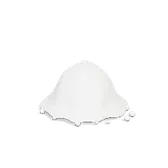
Titanium dioxide, illustrated
IngredientUsed in 4 products hereListed price

What is titanium dioxide used for?

Titanium dioxide (TiO₂) is a bright white mineral powder that scatters light very strongly. That makes it the main white pigment in paints, coatings, plastics and paper, where it provides whiteness and hiding power, and, in specially processed fine grades, a mineral UV filter in sunscreens. Paint makers use pigment-grade rutile; sunscreen makers use micronised, surface-coated grades.

Key facts

Name on labels (INCI)
Titanium Dioxide
Also called
TiO₂, Titania, Titanium(IV) oxide, Pigment White 6, CI 77891
CAS number
13463-67-7 source
Grade to ask for
Cosmetic, micronised and coated

A bright white mineral powder.

Functions

What it does

White pigment and opacity
Its high refractive index means a thin paint film can hide the surface underneath.
Brightness
Gives clean whites and makes tinted colours brighter.
UV protection
Micronised grades reflect and absorb ultraviolet light in sunscreens and protect some materials from UV degradation.
Used in

Products on How It's Made that use titanium dioxide

ProductIts role there
Sunscreen SPF 50UV filter (mineral).
Emulsion paintWhite pigment. The prime white pigment. It scatters light very strongly, so it gives the paint its whiteness and its ability to hide the surface underneath.
Gloss paintPigment. The white pigment that gives opacity and brightness. In gloss paint it is kept to fine, well-dispersed particles so it doesn't dull the shine.
Textured masonryPigment. White pigment for opacity and to make a clean base for tinting.

On How It's Made, titanium dioxide is in emulsion paint, gloss paint, textured masonry paint and sunscreen. It is usually the most expensive raw material in a white paint.

Grades

Grades and specifications

Rutile pigment grade
The standard for paints and coatings: high opacity and durability. Surface treatments are chosen for water-based or solvent-based systems and for interior or exterior durability.
Anatase grade
Slightly less opaque and less durable outdoors; used in some interior paints, paper and plastics.
Micronised cosmetic grade
Very fine, surface-coated particles for sunscreens, which look transparent on skin while filtering UV.
Safety and quality

Handling, safety and regulation

A fine powder handled with dust control and respiratory protection, because inhaled dust is a workplace hazard. Its use as a food colour (E171) has been banned in the EU since 2022; that does not apply to paint or sunscreen.

In cosmetics, titanium dioxide is a permitted UV filter and colourant with conditions in major markets. Sunscreens and other cosmetics in Nigeria need NAFDAC registration; paints follow Standards Organisation of Nigeria requirements.

Supply chain

Where titanium dioxide comes from

Titanium dioxide is made from titanium-bearing minerals such as ilmenite and rutile by the sulphate or chloride process. Production is concentrated among a handful of global producers, and Nigerian paint makers import almost all of their supply, which makes it a major exposure to exchange-rate movements.

Source it on Matta

Sourcing titanium dioxide through Matta

Request titanium dioxide

Send Matta a request with the grade, quantity and delivery location you need. For the wider category, see Matta's industrial chemicals page.

Listings found on matta.trade, read 19 Oct 2026. Prices are a snapshot, not live; the listing is always the final word. Different suppliers and grades: compare prices only where the unit matches.
Chemours
Titanium Dioxide - Tipure R 902+
₦6,150per kg
Pigment (paint/coatings) rutile grade, not cosmetic/sunscreen grade.
View current listing ↗
TRONOX
Titanium Dioxide - R996
₦4,868.75per kg
Pigment grade, not cosmetic grade.
View current listing ↗
KRONOS
Titanium Dioxide - Kronos 2190
₦6,303.75per kg
Card shows two prices: ₦6,303.75/kg and ₦6,500/kg (first used). Pigment grade, not cosmetic grade.
View current listing ↗

Related ingredients

Sources and method

  1. Resene: What is paint?
  2. Zona de Pinturas: Manufacture of emulsified paints
  3. Fisher Scientific: CAS RN 13463-67-7 (titanium dioxide)
  4. RMRDC Raw Materials 360: RMRDC urges paint manufacturers to embrace local raw materials (31 Jul 2026)

Important notice: product information and manufacturing disclaimer

The products, ingredient lists, and ingredient breakdowns displayed on this platform are provided for general informational, educational, and product-discovery purposes only. They illustrate typical ingredients that may be used in commercially available products and are not verified, complete, or approved manufacturing recipes, formulations, or production instructions.

Although Matta.trade may help you identify and source certain ingredients or raw materials, the availability of those materials does not mean that a finished product can be safely or successfully manufactured using the information provided here. Ingredient compatibility, proportions, processing methods, hygiene, equipment, stability, preservation, product testing, packaging, labelling, and applicable regulatory requirements must be independently assessed by appropriately qualified professionals.

Food products, cosmetics, personal-care products, beverages, and other manufactured goods may require specialized formulation, quality-control procedures, safety assessments, and regulatory approvals. Incorrect formulations or manufacturing practices can result in unsafe, ineffective, contaminated, or non-compliant products.

Users are responsible for independently verifying all formulations, ingredient suitability, manufacturing processes, safety requirements, and legal obligations before producing, selling, distributing, or using any finished product. Matta.trade does not guarantee that any product can be manufactured successfully or safely from the information displayed, nor that every listed ingredient is suitable for every intended application.

To the extent permitted by applicable law, Matta.trade disclaims responsibility for manufacturing decisions, product formulations, or outcomes resulting from the independent use or interpretation of the information provided on this platform. Nothing on this website should be interpreted as a guarantee of product safety, suitability, regulatory compliance, or commercial success.