How It's Madeby Matta
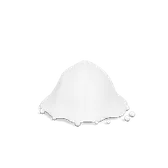
Calcium carbonate, illustrated
IngredientUsed in 4 products hereListed price

What is calcium carbonate used for in paint?

Calcium carbonate is ground limestone, marble or chalk. In paint it is the main extender (filler): a cheap white mineral that adds body, bulk and opacity, controls sheen and reduces the amount of expensive titanium dioxide and binder needed. The same material is used as a filler in plastics, paper, adhesives, sealants and textured coatings, and in purer grades in food, toothpaste and medicines.

Key facts

Name on labels (INCI)
Ground Calcium Carbonate
Also called
Ground calcium carbonate (GCC), Precipitated calcium carbonate (PCC), Calcite, Whiting, Chalk
CAS number
471-34-1 source
Grade to ask for
Paint grade, 5–10 µm, high whiteness

Ground white limestone or marble.

Functions

What it does

Extender
Bulks up the paint film at low cost and helps it build thickness.
Sheen control
Coarser particles scatter light and give matt finishes.
Texture
Graded marble grits create the texture of masonry coatings.
Filler in other industries
Adds stiffness and reduces cost in plastics, paper and sealants.
Used in

Products on How It's Made that use calcium carbonate

ProductIts role there
Emulsion paintFiller. The main extender. Ground limestone or marble adds body and opacity at a fraction of the cost of titanium dioxide and helps control sheen.
Gloss paintFiller. A small amount of extender for body. Gloss paints use far less filler than matt paints, because coarse particles reduce gloss.
Textured masonryMarble filler. Coarse and fine marble grades fill the coating and give a stone-like body. A mix of particle sizes packs densely into a hard film.
Metal primerFiller. An extender that adds body and reduces cost.

On How It's Made, calcium carbonate is in emulsion paint, gloss paint, textured masonry paint and metal primer.

Grades

Grades and specifications

Paint grade GCC
Specified by particle size (often around 5–10 µm for emulsions), whiteness and oil absorption.
Marble grits
Coarse graded particles for textured and decorative coatings.
PCC and food/pharma grades
Precipitated, very fine or very pure grades for specialist paints, food and medicines.
Safety and quality

Handling, safety and regulation

A low-hazard mineral handled with dust control. Buyers check whiteness, particle-size distribution, moisture and impurities such as silica and iron that affect colour.

Paint applications follow Standards Organisation of Nigeria requirements for the finished paint. Food and pharmaceutical uses require the relevant purity grades.

Supply chain

Where calcium carbonate comes from

Nigeria has limestone and marble deposits, and the Raw Materials Research and Development Council (RMRDC) is promoting local processing of calcium carbonate, together with kaolin and talc, so the paint industry relies less on imports. Quality and consistency of grinding are the main challenges for local supply.

Source it on Matta

Sourcing calcium carbonate through Matta

Request calcium carbonate

Send Matta a request with the grade, quantity and delivery location you need. For the wider category, see Matta's raw materials page.

Listings found on matta.trade, read 20 Oct 2026. Prices are a snapshot, not live; the listing is always the final word. Different suppliers and grades: compare prices only where the unit matches.
Omya International AG
CALCIUM CARBONATE - OMYACARB 2 -KS
₦615per kg
View current listing ↗
Turkcarb
Calcium Carbonate - Turkcarb
₦492per kg
View current listing ↗
Omya International AG
Calcium Carbonate
₦666.25per kg
View current listing ↗

Related ingredients

Sources and method

  1. Resene: What is paint?
  2. RMRDC Raw Materials 360: RMRDC urges paint manufacturers to embrace local raw materials (31 Jul 2026)
  3. Zona de Pinturas: Manufacture of emulsified paints
  4. Fisher Scientific: CAS RN 471-34-1 (calcium carbonate)

Important notice: product information and manufacturing disclaimer

The products, ingredient lists, and ingredient breakdowns displayed on this platform are provided for general informational, educational, and product-discovery purposes only. They illustrate typical ingredients that may be used in commercially available products and are not verified, complete, or approved manufacturing recipes, formulations, or production instructions.

Although Matta.trade may help you identify and source certain ingredients or raw materials, the availability of those materials does not mean that a finished product can be safely or successfully manufactured using the information provided here. Ingredient compatibility, proportions, processing methods, hygiene, equipment, stability, preservation, product testing, packaging, labelling, and applicable regulatory requirements must be independently assessed by appropriately qualified professionals.

Food products, cosmetics, personal-care products, beverages, and other manufactured goods may require specialized formulation, quality-control procedures, safety assessments, and regulatory approvals. Incorrect formulations or manufacturing practices can result in unsafe, ineffective, contaminated, or non-compliant products.

Users are responsible for independently verifying all formulations, ingredient suitability, manufacturing processes, safety requirements, and legal obligations before producing, selling, distributing, or using any finished product. Matta.trade does not guarantee that any product can be manufactured successfully or safely from the information displayed, nor that every listed ingredient is suitable for every intended application.

To the extent permitted by applicable law, Matta.trade disclaims responsibility for manufacturing decisions, product formulations, or outcomes resulting from the independent use or interpretation of the information provided on this platform. Nothing on this website should be interpreted as a guarantee of product safety, suitability, regulatory compliance, or commercial success.