
 How It's Made
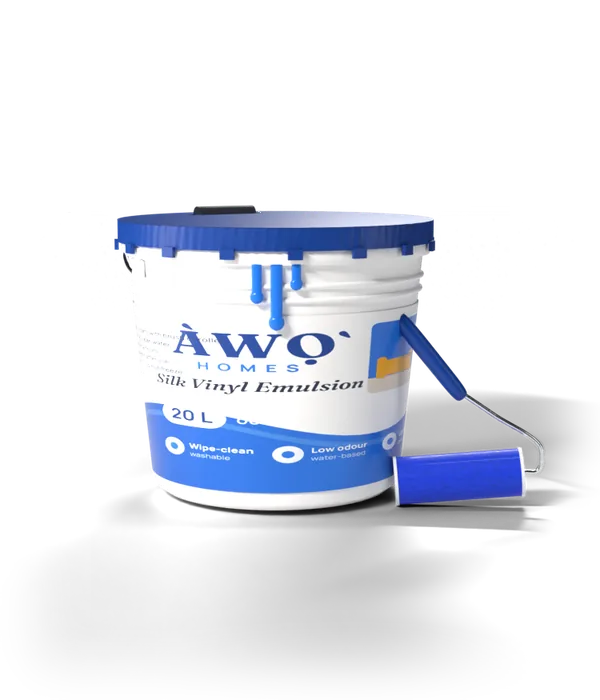
What goes into emulsion paint
| Ingredient | What it does in emulsion paint | Grade buyers ask for | Source on Matta |
|---|---|---|---|
 Aqua |
Carrier. The carrier. Pigments and fillers are dispersed in it and the binder is supplied as particles suspended in it. It evaporates after painting. | Conductivity < 5 µS/cm | Made on sitePurified on site by the manufacturer |
 Ground Calcium CarbonateIngredient guide → |
Filler. The main extender. Ground limestone or marble adds body and opacity at a fraction of the cost of titanium dioxide and helps control sheen. | Paint grade, 5–10 µm, high whiteness | ₦615 /kgOmya International AG · read 20 Oct 2026Request this product ↗View current listing ↗ |
 Styrene-Acrylic EmulsionIngredient guide → |
Binder. The binder. Tiny polymer particles fuse into a continuous film as the water leaves, holding the pigment on the wall and giving washability. | Styrene-acrylic, about 50% solids | ₦2,480.5 /kgTradeasia International PTE LTD · read 20 Oct 2026Request this product ↗View current listing ↗ |
 Titanium DioxideIngredient guide → |
White pigment. The prime white pigment. It scatters light very strongly, so it gives the paint its whiteness and its ability to hide the surface underneath. | Rutile, paint grade | ₦6,150 /kgChemours · read 19 Oct 2026Request this product ↗View current listing ↗ |
 Kaolin (China Clay) |
Filler. A clay extender that improves flow and helps give a smooth matt or silk finish. Calcined grades also add some dry hiding. | Calcined, paint grade | ₦1,742.5 /kgVanderbilt Minerals, LLC · read 20 Oct 2026Request this product ↗View current listing ↗ |
 Propylene Glycol |
Wet edge. Slows drying slightly so the painter can keep a wet edge and avoid lap marks, and improves freeze-thaw stability. | Industrial or technical grade | ₦2,955.08 /kgADM · read 19 Oct 2026Request this product ↗View current listing ↗ |
 Texanol (Ester Alcohol) |
Coalescent. A coalescing solvent that temporarily softens the binder particles so they fuse into one film, then slowly evaporates. | Specify to supplier | ₦4,817.5 /kgEastman · read 20 Oct 2026Request this product ↗View current listing ↗ |
 Sodium Polyacrylate |
Dispersant. Coats pigment and filler particles so they separate fully during grinding and don't clump back together in storage. | Specify to supplier | ₦5,099.38 /kgPatcham FZC · read 20 Oct 2026Request this product ↗View current listing ↗ |
 Hydroxyethyl Cellulose |
Thickener. A cellulose thickener that gives the paint body, so it loads on a roller or brush and doesn't run down the wall. | HEC, 30,000–100,000 mPa·s | ₦11,070 /kgAshland · read 20 Oct 2026Request this product ↗View current listing ↗ |
 Mineral-oil or Silicone Defoamer |
Defoamer. Breaks the foam created by high-speed mixing and by rolling, which would otherwise leave pinholes and craters in the dried film. | Specify to supplier | ₦6,150 /kgBASF · read 20 Oct 2026Request this product ↗View current listing ↗ |
 Isothiazolinone Blend |
Preservative. An in-can preservative that stops bacteria spoiling the paint in storage. Exterior grades also use a film biocide against mould. | Specify to supplier | ₦3,416.33 /kgTroy Corporation · read 20 Oct 2026Request this product ↗View current listing ↗ |
 Ammonium Hydroxide |
pH. Raises and holds the pH in the alkaline range, where the binder and thickener are most stable. | Ammonium hydroxide solution, about 25% | ₦1,640 /kgCHIKHLOLI CHEMICALS PVT.LTD · read 20 Oct 2026Request this product ↗View current listing ↗ |
How emulsion paint is made
Paint is usually made in two parts: a mill base, where pigments and fillers are dispersed, and a let-down, the larger tank of binder and additives that the mill base is added to. Batch sizes range from about 200 litres for specialist products to around 10,000 litres for mainline whites.
Condition the water
Process water goes into the dispersion tank with dispersant, a little defoamer and a pH adjuster, so it can wet the powders.
Disperse the pigments
Titanium dioxide, calcium carbonate and kaolin are added with the mixer slow, then a high-speed disc breaks the agglomerates down. This stage takes about half an hour and sets most of the paint's final properties.
Check the grind
Fineness is checked on a Hegman gauge. For matt emulsion paints a reading of about 5 is typical.
Let down
The dispersion is added to a tank of binder, thickener, coalescent, biocide and extra defoamer, and mixed gently until uniform.
Tint and adjust
Colour pastes bring the batch to shade; viscosity and pH are corrected to the specification.
Test and fill
The batch is checked for viscosity, colour, hiding, drying and sheen, then strained into buckets.
Common variations
- Matt, silk and sheen finishes
- Higher-gloss emulsions use more binder and less extender. Matt emulsions carry more filler relative to binder, which scatters light and hides wall defects.
- Contract versus premium emulsion
- Lower-cost paints use more calcium carbonate and less titanium dioxide and binder, so they hide and wash less well. Some use PVA instead of acrylic binder.
- Exterior and masonry paint
- Exterior grades need weather-resistant acrylic binders and film biocides against algae and mould. Textured masonry paint adds sand and coarse marble.
- Colours
- Coloured emulsions start from a white or clear base tinted with colour pastes, either in the factory or at a tinting machine in the shop.
Safety, quality and regulation
Water-based emulsion is lower in solvent than oil-based paint, but it still contains preservatives and coalescents. Factories handle fine powders such as titanium dioxide, kaolin and calcium carbonate, so dust control and respiratory protection matter, and biocides are handled to their safety data sheets.
Paint makers in Nigeria work to standards set by the Standards Organisation of Nigeria (SON). Many buyers, especially for exterior and institutional projects, also specify limits on volatile organic compounds and require lead-free formulations.
Where the raw materials come from
Nigeria has deposits of the main extenders: the Raw Materials Research and Development Council (RMRDC) is promoting local processing of calcium carbonate, kaolin and talc for paint so the industry relies less on imports. Titanium dioxide and acrylic binders are mostly imported, which leaves production costs exposed to the exchange rate.
Additives such as cellulose thickeners, dispersants, coalescents, defoamers and biocides are speciality chemicals made by a small number of global producers and bought in drums or bags through distributors.
Request titanium dioxide, binders, extenders and additives in one go. For the wider category, see Matta's industrial chemicals page.
Related products and ingredients
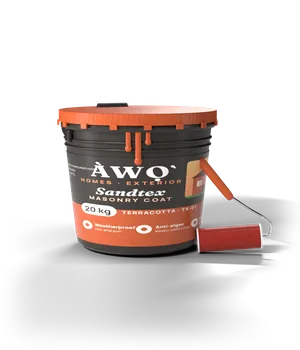 Paints, coatings & texturesTextured masonry
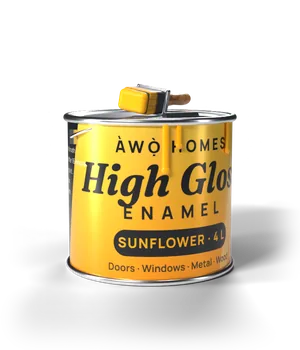 Paints, coatings & texturesGloss paint
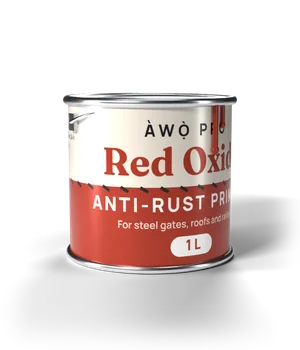 Paints, coatings & texturesMetal primer
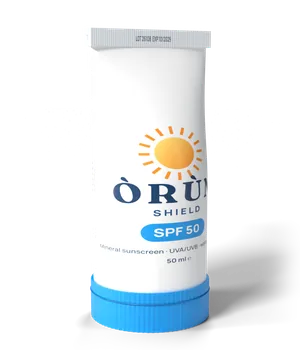 Cosmetics & personal careSunscreen SPF 50