How It's Madeby Matta
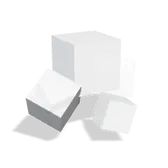
Monosodium glutamate, illustrated
IngredientUsed in 2 products hereListed price

What is monosodium glutamate (MSG) used for?

Monosodium glutamate (MSG) is the sodium salt of glutamic acid, a common amino acid. It is a flavour enhancer that delivers umami, the savoury taste of stock and meat. Manufacturers use it in seasoning cubes, instant noodle sachets, snack seasonings, soups and sauces. Most MSG is made by bacterial fermentation of sugars, and in food it is labelled E621.

Key facts

Name on labels (INCI)
MSG (E621)
Also called
MSG, E621, Sodium glutamate, Glutamic acid monosodium salt
E number
E621
Grade to ask for
99%, 40–80 mesh
Supplied as
25 kg bags

The sodium salt of glutamic acid, made by fermenting sugar or starch. Sold as glassy needle crystals.

Functions

What it does

Flavour enhancer
Provides umami and makes savoury foods taste fuller and meatier.
Salt reduction aid
Can allow some reduction in salt while keeping a savoury taste, because it adds flavour with less sodium than salt.
Used in

Products on How It's Made that use monosodium glutamate

ProductIts role there
Seasoning cubesFlavour enhancer. A flavour enhancer that delivers umami, the savoury taste people expect from stock.
Instant noodlesFlavour enhancer. A flavour enhancer in the sachet that delivers the savoury, stock-like taste.

On How It's Made, MSG is in seasoning cubes and the seasoning sachet of instant noodles.

Grades

Grades and specifications

Crystal size (mesh)
Sold in several crystal sizes, from large crystals for retail to fine powder for blending; 40–80 mesh is common for seasonings.
Purity
Food-grade MSG is typically 99% or more pure monohydrate.
Safety and quality

Handling, safety and regulation

Stored dry in sealed bags; it is stable and easy to handle. It must be declared on food labels.

The US FDA classes MSG as Generally Recognized as Safe (GRAS), and the EU permits it in certain foods with quantitative limits. It is listed in the Codex General Standard for Food Additives. Seasoning products in Nigeria need NAFDAC registration.

Supply chain

Where monosodium glutamate comes from

Glutamic acid was identified as the source of umami taste by Kikunae Ikeda in 1908. Today, Corynebacterium bacteria ferment sugars or starches to produce glutamate, which is neutralised with sodium and crystallised. Production is concentrated in Asia, and West Africa imports MSG in 25 kg bags.

Source it on Matta

Sourcing monosodium glutamate through Matta

Request monosodium glutamate

Send Matta a request with the grade, quantity and delivery location you need. For the wider category, see Matta's ingredients page.

Listings found on matta.trade, read 15 Oct 2026. Prices are a snapshot, not live; the listing is always the final word. Different suppliers and grades: compare prices only where the unit matches.
Niemenggu Fufeng Biotechnologies
Monosodium glutamate · Fufeng
₦1,927per kg
View current listing ↗
YSHC (Tianjin) Chemical
Monosodium Glutamate · Doris
₦1,927per kg
Search card also shows ₦2,400/kg; which applies is not stated.
View current listing ↗

Related ingredients

Sources and method

  1. Wikipedia: Monosodium glutamate
  2. Wikipedia: Bouillon cube
  3. FAO/WHO Codex Alimentarius: General Standard for Food Additives (GSFA Online)

Important notice: product information and manufacturing disclaimer

The products, ingredient lists, and ingredient breakdowns displayed on this platform are provided for general informational, educational, and product-discovery purposes only. They illustrate typical ingredients that may be used in commercially available products and are not verified, complete, or approved manufacturing recipes, formulations, or production instructions.

Although Matta.trade may help you identify and source certain ingredients or raw materials, the availability of those materials does not mean that a finished product can be safely or successfully manufactured using the information provided here. Ingredient compatibility, proportions, processing methods, hygiene, equipment, stability, preservation, product testing, packaging, labelling, and applicable regulatory requirements must be independently assessed by appropriately qualified professionals.

Food products, cosmetics, personal-care products, beverages, and other manufactured goods may require specialized formulation, quality-control procedures, safety assessments, and regulatory approvals. Incorrect formulations or manufacturing practices can result in unsafe, ineffective, contaminated, or non-compliant products.

Users are responsible for independently verifying all formulations, ingredient suitability, manufacturing processes, safety requirements, and legal obligations before producing, selling, distributing, or using any finished product. Matta.trade does not guarantee that any product can be manufactured successfully or safely from the information displayed, nor that every listed ingredient is suitable for every intended application.

To the extent permitted by applicable law, Matta.trade disclaims responsibility for manufacturing decisions, product formulations, or outcomes resulting from the independent use or interpretation of the information provided on this platform. Nothing on this website should be interpreted as a guarantee of product safety, suitability, regulatory compliance, or commercial success.